On a Tuesday morning in March 2026, a marketing director at an NBA franchise opens her CRM. There are no campaigns to approve. No segments to build. Overnight, the system sent 47,000 different emails — each one written for a specific season ticket holder, each one citing a different stat from that fan's last visit. The same system flagged 312 accounts at risk of cancelling, called the top 50 itself, and rescheduled the rest for the sales team. Her job today is to set goals for next week. That is the entire morning.
This is not a hypothetical scenario. Indiana Pacers run it daily on Salesforce Agentforce.
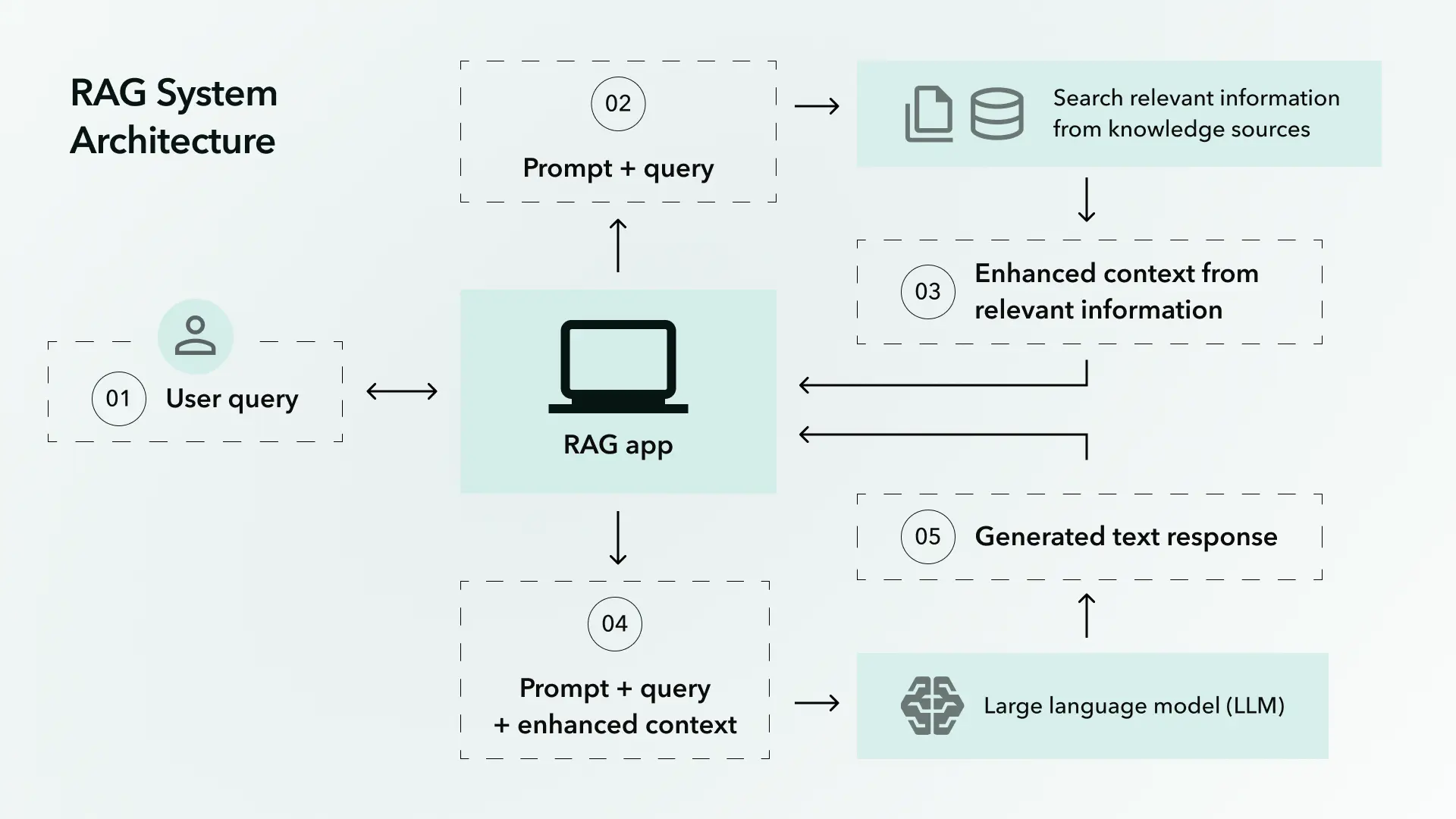
For three decades, sports CRM was a database. Profiles, ticket history, email lists, donation records. Marketers built segments by hand and sent campaigns once a week. AI did not change that picture until 2024. With agentic large language models sitting on top of unified fan profiles, CRM stopped being a record-keeping system and became a decision engine that runs millions of one-to-one choices every day.
The shift matters because the economics of personalization just inverted. Sending a tailored message to one fan used to cost more than that fan brings in across a season. Now it costs three cents. That single change broke the wall between mass marketing and one-to-one — and the teams that move first will widen a gap their competitors cannot close in a single budget cycle.
Three Things Changed in the Last 24 Months
The 2026 sports CRM stack rests on three technical shifts that all matured between 2023 and 2025. Skip any one of them and the rest does not work.
Token economics inverted. The cost of generating one personalized email through a large language model dropped by 50 to 100 times between 2023 and 2025. A bespoke message that required a junior copywriter in 2022 — call it $4 in labor — now costs three cents through OpenAI, Anthropic, or open-source models like Llama 3 and Mistral. Multiply by a season ticket base of 12,000 fans across 41 home games and the absolute numbers become real budget rather than R&D theater.
Unified profiles became table stakes. Identity resolution — stitching email, phone, device ID, ticketing ID, social handles into one profile — used to be a 12-month project requiring a dedicated data team. Customer Data Platforms (Salesforce Data Cloud, Segment, mParticle, Tealium) now offer it as a configurable product. Golden State Warriors unified 30+ sources and 100 million data points on Google Cloud, then watched ticket sales rise 35%. The CDP layer is no longer the moat. What sits above it is.
Agentic models moved from research to production. Salesforce Agentforce, Microsoft Copilot Studio, and open-source frameworks like LangGraph and CrewAI all shipped production-grade agent platforms in 2024 and 2025. These are not chatbots. They are decision engines that read structured data, call tools, write to systems of record, and execute multi-step workflows under policy constraints. The Pacers deployment is the first widely-covered sports case, but five more NBA franchises have similar projects in pilot.
The vendor noise around "AI CRM" goes back to 2017. The substance behind it landed in the last two years.
What an AI-CRM Actually Does That a Spreadsheet Cannot
The temptation in 2026 is to add "AI" to a slide and move on. The honest version is that an AI-driven CRM does six specific things a traditional CRM does not. Each one closes a gap that costs sports organizations measurable revenue.
Propensity Scoring at the Individual Level
A traditional CRM segments fans by past behavior: bought three matches, opens 40% of emails. An AI CRM scores every fan daily on future probability: 78% chance to renew, 12% chance to upgrade tier, 4% chance to churn this quarter. The Orlando Magic stitched 16 data sources into 2.5 million profiles and run scoring against them every night. Sales reps open their dashboard each morning to a ranked list — not "all season ticket holders" but the 50 most likely to lapse this week. Conversion on cold outreach typically rises by a factor of two to three when the list flips from chronology to score.
Next-Best-Action Without Rules
In a rule-based CRM, the marketer writes "if fan opens email but does not click in 48 hours, send push notification." On six segments this is manageable. On 60 it becomes 600 rules in conflict. The Pacers solved this by removing rules entirely. Salesforce Agentforce reads the unified profile, knows the current quarterly goal, and picks the next action for each individual fan — a discount, an invitation, a phone call, a generated piece of content. The marketing team writes goals; the agent runs millions of decisions underneath. Maintenance work on the system fell by 80% in the first six months.
Conversational Queries Against the Database
A marketer at a Premier League club used to write a brief, send it to the data team, and wait two weeks for a segment. The data team queues the request behind 14 others. By the time the segment arrives, the campaign idea is stale. In 2026 the same marketer types into a chat box: "show me season ticket holders who attended five or more matches last season, none this season, and bought merchandise in the last 90 days." The language model translates that into SQL, returns the segment, and proposes a campaign draft. Time from idea to launch falls from two weeks to twenty minutes.
Anomaly Detection That Catches Churn Before It Shows Up
Traditional CRM catches a churned fan after they fail to renew. By then the cost of winning them back is five to seven times the cost of having kept them. An AI CRM watches each fan's behavioral baseline — open rate, attendance rhythm, app sessions, merchandise cadence — and flags deviations. A frequent attendee suddenly absent for two weeks triggers a quiet outreach: "Hey, anything we can help with?" The NHL's BLADE analytics platform shows ranges where one such call resolves a churn risk that would later require a 20% discount and a month of negotiation.
Generative Content Per Profile
The 2022 stack let a marketer send 8 versions of an email. The 2026 stack sends 80,000 — each with a specific reference to the fan's last visit, their favorite player, their preferred section. Adobe and Real Madrid collaborate on this for 650 million global fans. Formula 1 saw email click-through rise 22% after switching to Salesforce Agentforce for newsletter generation. Generation cost per email is roughly $0.0003. The marginal cost of one-to-one disappears, which means the upper bound on personalization is no longer budget but creativity.
Real-Time Journey Optimization
Liverpool FC runs SAS Customer Intelligence 360 over fan behavior in the app and on the website. When a fan abandons a checkout, the system does not wait 24 hours to email them. It changes the next screen in real time — a different banner, a one-click discount, a suggested alternative match. Five to eight micro-decisions happen inside a single session. Conversion on abandoned carts lifted 18 to 24% against control groups. None of this works in a CRM that thinks in daily batches.
Case Study: Indiana Pacers and Salesforce Agentforce
Pacers Sports & Entertainment runs the most-cited sports deployment of agentic CRM in 2026. The company moved its fan data — ticketing, food and beverage, merchandise, app sessions, email engagement, survey responses, demographic detail — into Salesforce Data Cloud. Agentforce sits on top.
The agent reads each profile in real time and decides the next contact: a discount on a player's jersey for a season ticket holder who has not bought merchandise since 2022, a VIP invite for a fan hitting a loyalty anniversary, a re-engagement offer for someone who has not opened the app in four months. The marketing team specifies the goal — increase renewal rate by 8% this quarter — and the agent runs the millions of one-to-one decisions that follow.
Three numbers stand out from the published case. Manual segmentation work fell by more than five times. The agent makes one-to-one decisions across more than one million profiles simultaneously. The marketing team reallocated to strategic projects, which Pacers explicitly cites as the larger long-term win.
The pattern is repeatable. Five other NBA franchises have publicly disclosed pilot agreements with Salesforce or Microsoft. Two MLS clubs and a Premier League side are reported to be in advanced procurement. None of these projects required exotic data science. They required a CDP foundation, an LLM contract, and a willingness to retire dozens of rule-based campaigns.
Case Study: Orlando Magic and Look-Alike Modeling
Orlando Magic took a different angle on the same shift. Instead of automating outbound, they automated lead discovery for the sales team.
The franchise unified 16 data sources — ticketing, concessions, merchandise, mobile app, survey data — into a single warehouse with 2.5 million profiles and roughly 300 productionized tables. Machine learning models then search for single-game ticket buyers who behaviorally resemble the franchise's top season ticket holders: same kinds of matches attended, same group composition, same food and beverage spend, same arrival times.
The sales team does not call "everyone who ever bought a ticket." They call a few hundred high-resemblance candidates per week and pitch them on partial-season or full-season plans. The franchise reported a seven-figure lift in ticket sales and sponsorship attributable to the new pipeline. Conversion rate against control improved by a factor of four to five.
What changed here is subtle. CRM has always allowed segmentation by manual criteria — "buyers who came to 5+ games, live within 30 miles, age 35 to 55." The marketer's intuition shaped the criteria. Look-alike modeling inverts that. The model finds patterns the marketer would not have thought of: a fan who always arrives 90 minutes early and buys a beer in the upper concourse looks like a season ticket buyer; another who shows up at tip-off does not. Humans cannot hold 40 simultaneous behavioral variables in their head. Models can.
Case Study: Formula 1 and the 80% Drop in Response Time
The Formula 1 deployment shows what an AI-CRM looks like at a global scale.
F1 brought 100+ data sources into Salesforce Data Cloud — app, website, fantasy league, ticketing, store, telemetry, support tickets, surveys — and built unified profiles for 24 million fans. Salesforce Agentforce sits on top. The agent answers fans in their language and tone, knows their support history, their token holdings, their loyalty tier. Service response times fell by 80%.
The same architecture powers Marketing Cloud. F1 now sends up to 5 million personalized push notifications inside a 90-second window during a race. Each fan gets a message contextual to their favorite team, driver, fantasy lineup, and current bet. The 2022 CRM stack could have segmented this audience into ten variants. The 2026 stack writes five million.
The collapse of service, marketing, and sales into a single agent layer is the actual innovation. Three teams used to maintain three sets of tools, three data models, three workflows. F1 maintains one. Salesforce has signalled that the same architecture is being rolled out to NFL, MLB, and Bundesliga clients through 2026 and 2027.
What This Costs (The Honest Numbers)
Vendor demos and conference keynotes treat AI-CRM as a single product with a single price. Practitioners know it is three layers, and each one has a different cost shape.
Layer one: data foundation. Identity resolution and unified profile are the prerequisite. A Customer Data Platform license runs $30,000 to $150,000 per year depending on profile count. Implementation — connecting ticketing, ESP, mobile app, point of sale, social — typically costs $50,000 to $250,000 the first year. For a club of 500,000 active fans, total Year 1 is in the $100K to $400K range.
Layer two: predictive and generative. Propensity scoring, churn prediction, conversational queries, generative email content. This is where 80% of the immediate value sits. A pilot using open-source models and existing CDP runs $30K to $80K and takes 8 to 12 weeks. A production deployment with full integration runs $100K to $300K. Ongoing LLM API costs for a mid-sized club land around $1K to $5K per month.
Layer three: agentic automation. The Pacers tier. Salesforce Agentforce, Microsoft Copilot Studio, or a custom build on LangGraph. License costs start around $30K per year and scale with usage. Implementation runs $150K to $500K. Most clubs reach this layer in Year 2 or Year 3.
Total Year 1 for a serious deployment lands between $250K and $750K all-in. F1 and the Warriors spend low seven figures annually. The pricing varies by region — North American clubs typically pay 30 to 50% more than European peers for the same vendor stack.
The honest framing: an AI-CRM is not a single purchase. It is a 24-month roadmap. Skipping the data foundation to get to the agent layer is the single most common implementation failure in 2026 sports tech.
The Order of Operations: Don't Skip Identity Resolution
The temptation in 2026 is to start with the visible features. Generate emails. Build a chatbot. Launch a propensity score. Skip the boring infrastructure work because identity resolution does not demo well in a board meeting.
This is the largest source of failed AI-CRM projects in sports right now. A propensity model trained on fragmented data hallucinates: it says a fan is at low risk because his attendance looks fine, but it does not know he stopped opening emails on a different identity. A generative campaign personalizes from incomplete history and writes something embarrassing. An agent makes a decision without seeing the full picture.
The correct sequence:
Step 1 (months 1 to 3): Identity and data foundation. Stitch profiles, build the unified record, get ticketing, ESP, mobile, point of sale, and social into one place. Boring, expensive, mandatory.
Step 2 (months 4 to 6): Predictive layer. Propensity scores for renewal, upgrade, churn. Look-alike models for sales. Anomaly detection for early warning. This is where the first measurable revenue lift arrives.
Step 3 (months 7 to 9): Generative layer. Personalized emails at scale. Conversational query interface for marketing. Generated audio and video content for app and social.
Step 4 (months 10 to 18): Agentic automation. Next-best-action across channels. Real-time journey optimization. Service agent on top of the same profile.
The temptation to reorder is constant. Resist it. Every team that started with the agent layer and worked backward spent 18 months and a million dollars getting back to step one.
Where This Gets You in 18 Months
The end state of a serious AI-CRM build is not "better email open rates." It is a different operating model for the entire commercial side of a sports organization.
Marketing headcount stops scaling with audience size. A team of four can run one-to-one personalization for two million fans because the agent layer handles execution. Headcount shifts toward strategy, brand, and creative direction.
Sales becomes appointment-driven. Reps no longer cold-call lists. They work ranked queues of high-propensity targets generated by the model. Pipeline efficiency typically doubles in the first year.
Service collapses into the marketing stack. The Formula 1 model — one agent layer covering inbound support, outbound campaigns, and proactive outreach — becomes the default for clubs above 200,000 active fans. Three teams become one.
Retention becomes the dominant KPI. Acquisition costs more than retention in every sports market in 2026, and the gap widens each year. An AI-CRM tilts the entire organization toward keeping fans rather than chasing new ones — and the cost curve makes that economically rational for the first time.
The clubs that finish this build by 2028 will operate at a 30 to 40% cost advantage on customer operations against clubs that did not. That gap is structural. It does not close with marketing spend.
Conclusion: The Database Era Is Ending
The 30-year run of CRM as a passive record-keeping system is ending. The Pacers, Orlando Magic, Formula 1, Liverpool, and Warriors deployments are not edge cases. They are the first wave of a stack that will be table stakes in pro sports by 2028.
For sports organizations evaluating their CRM today, the decision is not whether to add AI. It is which layer to start with and how fast to move through the sequence. Starting too late means handing two to three years of operational advantage to a competitor; starting too late on the wrong layer means burning the budget and still arriving late.
The cost of personalization fell by two orders of magnitude. The infrastructure to use that drop is finally mature. The teams that recognize the shift and act on it in the next 12 to 18 months will define how the commercial side of professional sports works for the rest of the decade. The teams that wait for "the technology to settle" will discover that the settling happened in 2024, and the bill for catching up grew while they watched.
If you are running a sports CRM today and the words "rules-based segmentation" describe your stack, the conversation is overdue. We help sports organizations audit existing CRM stacks, identify the highest-ROI AI layer to deploy first, and plan the 18-month sequence end to end. Reach out if you want a second opinion on where your CRM sits on the curve.
For the club that wants the base layer first, Revanta Loyalty holds tickets, season passes, loyalty and campaigns on one fan profile, which is the data an AI layer needs.
For our view on what a club system has to do in 2026, and where Revanta fits, read Sports CRM in 2026: When the Database Starts Deciding.