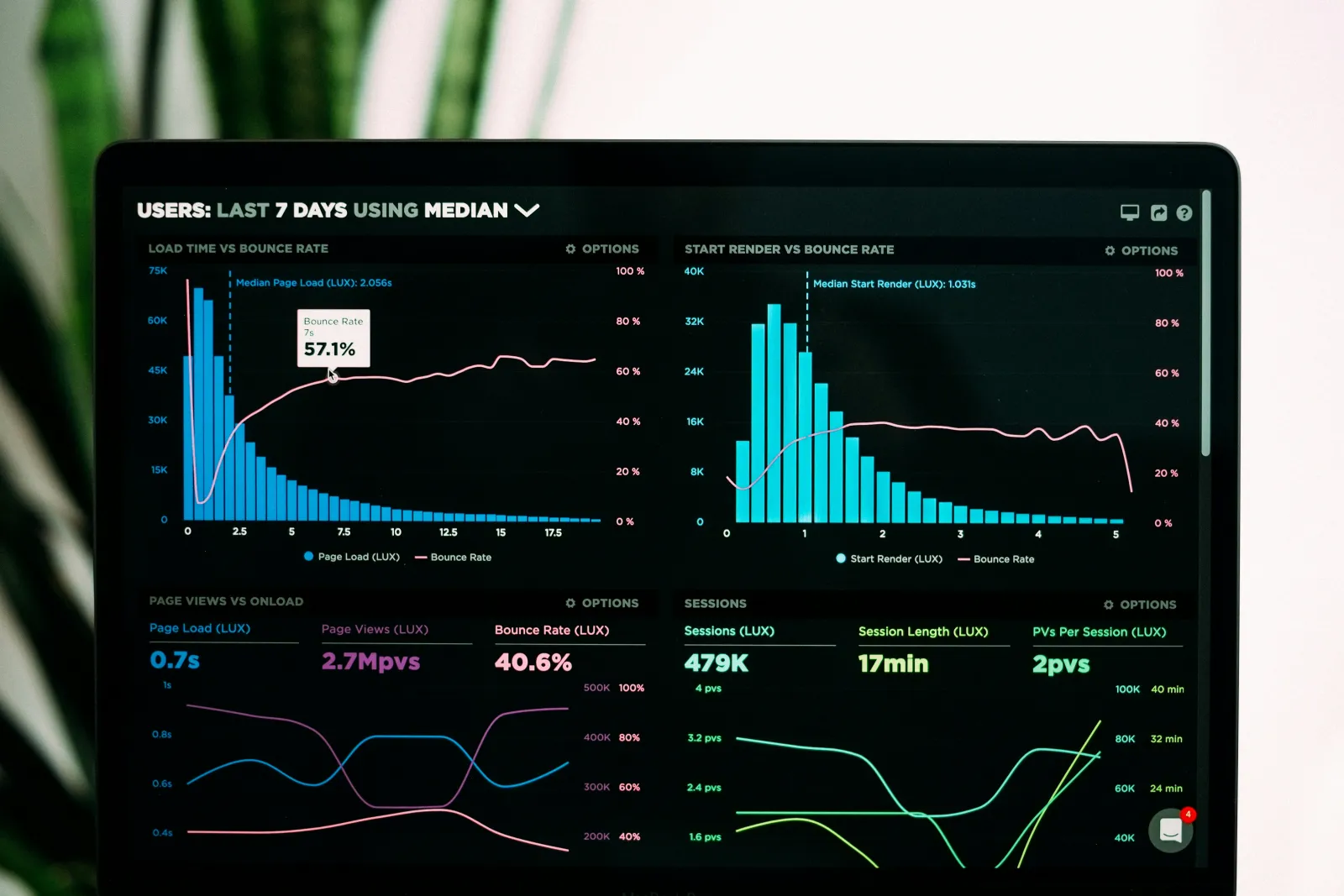
A coach glances at their tablet during halftime. The screen shows a player's fatigue index climbing toward the red zone, their sprint recovery time 12% slower than baseline, and a recommendation to substitute them before the 65th minute. This is not science fiction. This is how elite sports teams make decisions in 2025.
The age of guesswork in sports is over. Three out of four professional teams now rely on real-time analytics for performance and strategy decisions. The global sports analytics market is projected to exceed $22 billion by 2030, driven by AI adoption across the NBA, NFL, Premier League, and Formula 1. For coaches, this shift represents both an opportunity and a challenge: adapt to data-driven decision-making or risk falling behind.
From Spreadsheets to Real-Time Intelligence: The Evolution Beyond Traditional CRM
Traditional sports CRM systems served their purpose well. They tracked fan engagement, managed ticket sales, monitored merchandise purchases, and maintained athlete records. These platforms centralized data and automated routine tasks, giving teams a foundation for organized operations.
But traditional CRM has a fundamental limitation: it looks backward. It tells you what happened, not what is about to happen.
AI-powered analytics represent a paradigm shift. Instead of static player profiles and historical stats, modern systems process live data streams from wearables, optical tracking systems, and biometric sensors. They transform raw information into predictive insights that coaches can act on immediately.
Consider the difference:
Traditional CRM approach:
- Player profile shows 23 games played this season
- Medical records indicate a hamstring strain in October
- Training attendance logged at 95%
AI-powered analytics approach:
- Real-time fatigue index at 78% (threshold: 85%)
- Sprint recovery time degraded 8% from last week
- Asymmetric load distribution detected in left leg
- Injury risk probability: elevated
- Recommendation: reduce training intensity by 15% for next 48 hours
The shift is not just about having more data. It is about having the right data at the right moment, processed into actionable intelligence that prevents problems before they occur.
The Technology Stack: How Real-Time Coaching Actually Works
Modern sports analytics combines multiple technologies into an integrated system that captures, processes, and delivers insights in real time.
Wearable Sensors and GPS Tracking
At the foundation are wearable devices that capture player movement and physiological data. Catapult One leads the GPS tracking market, detecting up to 1,250 movements per second and tracking positions within 100 centimeters. These devices measure total distance covered, sprint counts, acceleration events, and changes of direction.
More than 200 professional clubs worldwide now use Playermaker, including Manchester City, LA Galaxy, and Borussia Dortmund. The system tracks foot-level biomechanics, capturing data that traditional GPS cannot see.
WHOOP 4.0 has transformed recovery monitoring at clubs like Arsenal FC. Players track heart rate variability, sleep quality, and recovery scores, with team features that allow coaching staff to monitor readiness across the entire squad.
Optical Tracking Systems
The NBA has deployed Sony's Hawk-Eye AI camera system across all arenas for the 2025 Playoffs. These systems capture real-time 3D data of every player and the ball, including movement, speed, and positioning.
Second Spectrum's optical tracking, used by both the NBA and WNBA, provides the raw positional data that feeds into more sophisticated AI analysis. During a typical game, these systems generate millions of data points that would be impossible for human analysts to process in real time.
Biometric Integration
NFL players wear GPS trackers, accelerometers, and heart rate monitors embedded in shoulder pads and helmets. Some use mouthguards with iTero intraoral scanners that capture additional physiological data.
The Digital Athlete platform, the NFL's partnership with AWS, processes approximately 6.8 million video frames during each week of games. During practices, it handles about 15,000 miles of player tracking data per week, equating to more than 500 million data points.
The AI Processing Layer
Raw data alone is meaningless without intelligent processing. Machine learning models analyze patterns across historical data and real-time inputs to generate predictions and recommendations.
These systems can:
- Detect fatigue patterns that precede injuries
- Identify subtle changes in movement mechanics
- Predict optimal training loads for individual players
- Suggest tactical adjustments based on opponent analysis
- Flag players who should be substituted before performance degrades
The output appears on coach tablets, dashboards, and notification systems, transforming complex analysis into clear, actionable guidance.
Injury Prediction: The Most Valuable Application
Injuries devastate teams. A single ACL tear can cost a club over 500,000 EUR in treatment, rehabilitation, and lost performance. The human cost to athletes is immeasurable. AI injury prediction represents perhaps the most compelling application of sports analytics technology.
How Injury Prediction AI Works
Machine learning models analyze dozens or even hundreds of variables to identify injury risk before symptoms appear. The NFL's Digital Athlete system assesses training volume, movement patterns, historical injury data, and environmental factors to determine when players are at elevated risk.
University of Delaware researchers have developed a model that predicts lower-extremity musculoskeletal injury risk after concussion with 95% accuracy. The system analyzes more than 100 variables including sports history, medical records, concussion type, and cognitive data.
Random forest models have predicted hamstring injuries with 85% accuracy based on data from multiple studies. The key is combining multiple data sources: workload data from wearables, biomechanical analysis from tracking systems, and physiological signals from biometric sensors.
Real-World Results
The impact is measurable:
- One NBA team reported a 41% reduction in ACL tears using AI-powered load management
- The NFL achieved a 17% reduction in concussion rates between 2023 and 2024
- Wearable-based load management has reduced overuse injuries by 30% in basketball
Liverpool FC's relatively low injury rates during their peak seasons between 2018 and 2020 were not luck. The club's data-informed load monitoring policies, developed by their analytics team, kept players fresh for key matches during their Champions League and Premier League winning campaigns.
Alert Systems and Dashboards
Modern systems do not wait for coaches to check reports. They push notifications when thresholds are exceeded.
A typical injury risk dashboard might show:
- Individual player fatigue scores with color-coded risk levels
- Week-over-week training load trends
- Asymmetry alerts when left-right load distribution diverges
- Recovery score comparisons to personal baselines
- Recommended training modifications
When a player's metrics flag potential fatigue or stress, the system advises rest even if the player feels fine. This shift from reactive to proactive injury prevention fundamentally changes how teams manage player health.
Advanced Metrics: Beyond Goals and Assists
Traditional statistics capture outcomes: goals scored, assists made, passes completed. Advanced metrics capture value creation throughout the entire game.
Expected Threat (xT)
Expected Threat, developed initially by Sarah Rudd in 2011 and refined by Karun Singh in 2018, measures how a player's action increases the probability of scoring. The pitch is divided into a grid, commonly 12x8 or 16x12 zones, with each zone assigned a base xT value based on historical scoring probability from that position.
Every time a player completes an action, the model measures the difference between the xT value at the start and end. A midfielder passing from a low-threat area (xT: 0.01) into the edge of the box (xT: 0.10) generates 0.09 xT, meaning they increased the team's chances of scoring by 9% with that single action.
This matters because xT identifies players who create chances even without goals or assists on their record. A fullback who consistently carries the ball into the final third might not get traditional credit, but their xT contribution reveals their genuine attacking value.
Physical Load Metrics
Beyond tactical metrics, teams track cumulative physical stress:
- Acute-to-Chronic Workload Ratio: Compares recent training load to longer-term baseline
- High-Speed Running Distance: Total meters covered above sprint threshold
- Acceleration Load: Cumulative stress from speed changes
- Deceleration Events: Often more stressful on joints than acceleration
- Heart Rate Recovery: Speed of return to resting heart rate post-exertion
These metrics inform daily training decisions. If a player's acute workload spikes too far above their chronic baseline, injury risk increases significantly. AI systems monitor these ratios continuously and flag concerns before traditional symptoms appear.
Case Study: Liverpool FC's Data Science Revolution
Liverpool FC's transformation into an analytics powerhouse offers a blueprint for how data science can drive sustained competitive advantage.
When Fenway Sports Group acquired Liverpool in 2010, they brought the same analytical philosophy that had transformed the Boston Red Sox. Their first major hire was Ian Graham, a data expert with a PhD from Cambridge University, as Director of Research.
The club assembled an unusual team. William Spearman, Liverpool's Lead Data Scientist, earned his PhD in particle physics at Harvard and worked at CERN on Higgs boson experiments. Tim Waskett, another key team member, is an astrophysicist. These researchers bring scientific rigor to football analysis.
The Transfer Committee Process
Every Liverpool signing passes through a data-driven evaluation. The Transfer Committee includes the analytics team, video analysis staff, financial analysts, scouts, and the manager. Dr. Ian Graham's mathematical models evaluate players beyond traditional statistics, focusing on how they would perform within the team's tactical framework.
This approach identified undervalued players like Mohamed Salah, Diogo Jota, and Andy Robertson, all of whom exceeded traditional scouting expectations.
Pitch Control and Real-Time Analysis
Liverpool's system combines event data and tracking data to understand how each action impacts goal probability. As Tim Waskett explained, every ball position is converted to a goal probability: "this value, 1.3%, is the probability that a goal will be scored with the ball in this position within the next 15 seconds."
The club's partnership with SkillCorner provides live video analytics monitoring ball and player movements. Integration with wearable technology captures distance covered, speed, and physical impacts during training, enabling precise load monitoring.
Results
The outcomes speak clearly:
- Champions League title in 2019
- Premier League title in 2020
- Consistently competitive seasons with relatively low injury rates
Very few clubs incorporate analytical knowledge into top-level decision-making to the extent Liverpool does. Their model demonstrates that sustained investment in data science infrastructure pays dividends over time.
NBA Load Management: Extending Careers Through Data
The NBA pioneered systematic load management, using data to balance player performance against long-term health.
The Technology Infrastructure
KINEXON sensors track metrics including total distance, sprint counts, jumps, and changes of direction. This data feeds into comprehensive load profiles for each player. Nearly every NBA team relies on KINEXON for data insights, and one in three EuroLeague teams has adopted similar systems.
Catapult Vector devices provide workload and fatigue insights, while collaborations like STRIVE and KINEXON integrate electromyography (EMG) sensors into compression shorts to measure muscle activation alongside positional data.
How Load Management Works
Sports performance analysis software measures distance covered during games and practices, speed, and acceleration. Coaches and trainers use this data to understand player exertion levels and make evidence-based decisions about rest.
When metrics flag potential fatigue, rest days are advised even if players feel healthy. The 2024 load management report distributed to all 30 NBA teams used tracking metrics to assess injury risks while maintaining individual privacy.
The Business Case
Over 20% of basketball players suffer from Jumper's Knee, with each case costing up to 500,000 EUR. Data-based load management helps reduce overuse injuries by 30%, saving money while improving performance.
The NBA's new 65-game minimum rule for major season awards reflects the league's effort to balance player health with fan expectations. The goal is encouraging participation without forcing unhealthy players into action.
The NFL Digital Athlete: AI at Scale
The NFL's partnership with AWS created the Digital Athlete platform, the most comprehensive injury prediction system in professional sports.
Data Collection at Scale
During each week of games, Digital Athlete processes approximately 6.8 million video frames and documents around 100 million player locations and positions. During practices, it handles about 15,000 miles of tracking data per week.
The system combines video data with sensors embedded in shoulder pads, helmets, and mouthguards. Environmental factors like weather and playing surface are integrated with equipment data and play type analysis.
Risk Mitigation Modeling
Digital Athlete's core AI component analyzes training data to determine optimal training volume while minimizing injury risk. The system tells players and coaches when athletes can safely push themselves and when they need to back off.
All 32 NFL clubs have access to the team portal, which includes daily training volume and injury risk information, league-wide trends, and benchmarks for comparison.
Measurable Impact
The results justify the investment:
- 17% reduction in concussion rates between 2023 and 2024
- Substantial reduction in lower extremity injuries following preseason protocol changes
- Data-informed rule changes, including the fair catch rule for kickoffs, targeted 7% reduction in returns (expected to reduce concussions by 15%)
Future development includes pose estimation features that assess body positioning to better understand how movement mechanics contribute to injury risk.
The Investment Question: What Does This Actually Cost?
For organizations considering AI-powered analytics, the investment question is paramount.
Premier League Spending Patterns
Top clubs like Manchester City, Arsenal, and Liverpool invest 1 to 5 million GBP annually in analytics. Smaller clubs like Brentford and Brighton achieve impact on budgets under 1 million GBP.
Arsenal spent just over 2 million GBP acquiring StatDNA in 2012, one of the first major analytics investments in English football. Liverpool invested heavily in building an internal research department rather than acquiring external companies.
The ROI Calculation
The return comes from multiple sources:
Injury Prevention: A single major injury can cost 500,000 EUR or more. Preventing even one significant injury per season can justify substantial analytics investment.
Transfer Efficiency: Analytics-driven recruitment identifies undervalued players. Liverpool's Moneyball approach built a championship squad without the spending of Manchester City or Chelsea.
Performance Improvement: Clubs using advanced analytics outperform expectations. In 2024/25, Liverpool exceeded their expected points (based on xG analysis) by 18 points. Brighton exceeded theirs by 7 points.
Extended Careers: Proper load management extends player careers, protecting the investment in expensive signings.
Barriers to Adoption
Challenges remain significant:
- Data literacy gaps at leadership levels
- Budget constraints for smaller organizations
- AI explainability concerns (understanding why systems make specific recommendations)
- Player privacy considerations
- Integration complexity across multiple data sources
The initial investment in technology, training, and personnel is substantial. Returns are not always immediate, which can discourage adoption by organizations focused on short-term results.
The Coach Notification Revolution: Information at the Right Moment
The true value of AI analytics is not the data collection or even the analysis. It is delivering the right information to the right person at the right moment.
Real-Time Alerts
Modern systems push notifications when action is needed:
- Fatigue Threshold Alerts: "Player 7 fatigue index at 87%. Consider substitution before 70th minute."
- Asymmetry Warnings: "Left leg load 12% higher than right over past week. Recommend biomechanical assessment."
- Recovery Flags: "Player 11 HRV 15% below baseline this morning. Consider modified training."
- Tactical Insights: "Opponent's right side defending 23% weaker on counter-attacks. Target channel for transitions."
Automated Training Adjustments
Some systems go beyond alerts to automatically modify training plans:
- Reducing session intensity when cumulative load exceeds thresholds
- Adjusting individual player workloads based on game minutes
- Scheduling recovery sessions based on biometric data
- Flagging players who should skip certain drills
Integration Challenges
The technology works only if coaches use it. Resistance comes from multiple sources:
- Fear of data overload
- Preference for traditional methods
- Mistrust of algorithmic recommendations
- Lack of technical training
Successful implementation requires change management alongside technology deployment. The best analytics teams present insights in simple, actionable terms rather than overwhelming coaches with raw data.
What This Means for the Future of Coaching
The implications extend beyond technology adoption.
The Changing Role of the Coach
Coaches are becoming integrators of human judgment and machine intelligence. The AI does not make decisions. It provides recommendations that human coaches evaluate against context the machine cannot see: player psychology, team dynamics, strategic priorities.
By 2030, industry analysts project that generative AI and autonomous agents will dominate sports analytics. Real-time adaptive models could suggest in-game substitutions autonomously, adjusting strategies second by second based on evolving game states.
But the human element remains essential. A machine can identify that a player's metrics suggest substitution. Only a human coach understands that this player thrives under pressure and delivers in crucial moments despite elevated fatigue.
Democratization of Analytics
Technology costs are declining while capabilities increase. What required multi-million dollar investments a decade ago is now accessible to smaller organizations.
This democratization changes competitive dynamics. Clubs that extract insights more effectively from available data will outperform those with larger budgets but less analytical sophistication.
The Talent Pipeline
Organizations need people who understand both sports and data science. Liverpool hired particle physicists and astrophysicists because they needed researchers comfortable with complex systems and uncertain data.
The sports industry is creating new career paths: data scientists who understand athletic performance, analysts who translate complex models into coaching language, and technologists who build integrated systems from multiple data sources.
Conclusion: The Competitive Imperative
AI-powered real-time coaching is not optional for organizations that want to compete at the highest levels. The data is too valuable, the competitive advantage too significant, and the injury prevention benefits too compelling to ignore.
The transformation requires more than technology purchases. It demands organizational commitment to data-driven decision-making, investment in people who can bridge analytics and coaching, and patience to develop systems that deliver long-term value.
For athletes, the benefits are clear: longer careers, fewer injuries, and training optimized for their individual physiology. For coaches, AI represents a powerful tool that enhances rather than replaces their judgment. For organizations, analytics investment delivers measurable returns through improved performance and reduced injury costs.
The age of guesswork really is over. The teams that recognize this reality and act on it will define the future of competitive sports.
The groundwork for any of this is clean training data. Revanta SportSchool, our youth sports club and academy software, keeps practice plans, drills, attendance and fitness tests for every player.
Sources
- WSC Sports - The $2.5B Secret: How AI Coaching is Transforming Elite Sports Performance
- Harvard Science Review - How AI Tools Are Revolutionizing Sports Metrics
- KINEXON Sports - NBA Load Management
- NFL Player Health and Safety - Digital Athlete
- Medium - How Liverpool Made Data Their Competitive Advantage
- Science Watchdog - William Spearman: The Scientist Behind Liverpool's Winning Edge
- PMC - Machine Learning Applications in Sports Injury Prediction
- Hudl - How Wearable Technology Elevates Elite Football Performance
- StatsBomb - Possession Value Models Explained
- AnalyiSport - How Premier League Clubs Are Investing in Data Analysis