


A sports club sits on a mountain of data. Ticket purchases, merchandise orders, app logins, Wi-Fi connections at the arena, call center transcripts, turnstile scans. Most clubs collect all of it. Few do anything useful with it.
The difference between a club that earns 5 EUR per fan per year in non-matchday revenue and one that earns 35 EUR comes down to one thing: how well they turn raw data into decisions. This guide walks through the practical steps — from building a unified fan profile to running campaigns that actually move revenue.
The Problem With Raw Fan Data
Most clubs store fan information across five or six disconnected systems. The ticketing platform holds purchase history. The merchandise shop has its own customer database. The mobile app tracks engagement separately. The call center logs sit in yet another tool.
The result: a single fan appears as three or four different records. Marketing sends duplicate emails. The club pays acquisition costs for fans it already has. Nobody can answer basic questions like "How many fans attended at least three matches AND bought merchandise this season?"
Deloitte's 2024 Annual Review of Football Finance found that clubs with unified fan data platforms reported 18-23% higher commercial revenue per fan than those relying on siloed systems. The gap comes not from having more data, but from connecting it.
Building a Unified Fan Profile
The industry calls this a "golden record" — one profile per fan that pulls from every touchpoint. Several platforms handle this differently.
Tribune, a CRM built specifically for sports, merges data from ticket systems, season passes, merchandise purchases, turnstile scans, Wi-Fi usage, call center interactions, and mobile app activity. It uses deterministic matching (phone number, email, customer ID) and probabilistic matching (name + date of birth + behavioral patterns) to deduplicate records. Clubs using Tribune typically clean up their database within two weeks, with automatic deduplication running continuously after that.
Salesforce Sports Cloud takes a broader approach, connecting fan profiles with sponsor data and broadcast metrics. It works well for large multi-sport organizations that need to tie fan engagement back to sponsorship value.
Microsoft Dynamics 365 offers strong integration with existing Microsoft infrastructure — useful for clubs already running Office 365 and Azure. Real Madrid adopted Dynamics 365 in 2019 to unify data from 450 million fans across 200 countries, enabling personalized content delivery at a scale that was previously impossible.
SAP Sports One, used by the German Football League (DFL) and several Bundesliga clubs, focuses heavily on performance analytics alongside fan data, making it a good fit for organizations that want player and fan insights in one ecosystem.
The choice of platform matters less than the discipline of actually connecting data sources. A club running Tribune with five integrated data feeds will outperform one running Salesforce with only two.
What Goes Into a Fan Profile
A useful fan profile contains more than name and email. The best profiles include:
- Transaction history: every ticket, every merchandise purchase, every food order at the arena
- Attendance patterns: which matches they attend, which sections they sit in, whether they arrive early or late
- Digital behavior: app usage frequency, content preferences, push notification response rates
- Self-reported preferences: favorite player, how they commute to the arena, family composition
- Communication preferences: which channels they respond to, when they open messages
Tribune and similar platforms let fans fill in parts of their profile voluntarily. This self-reported data — favorite player, preferred seating section, family details — turns out to be some of the most commercially valuable. A fan who tells you they have two children under 10 just handed you the input for a family package offer.
Segmentation That Drives Action
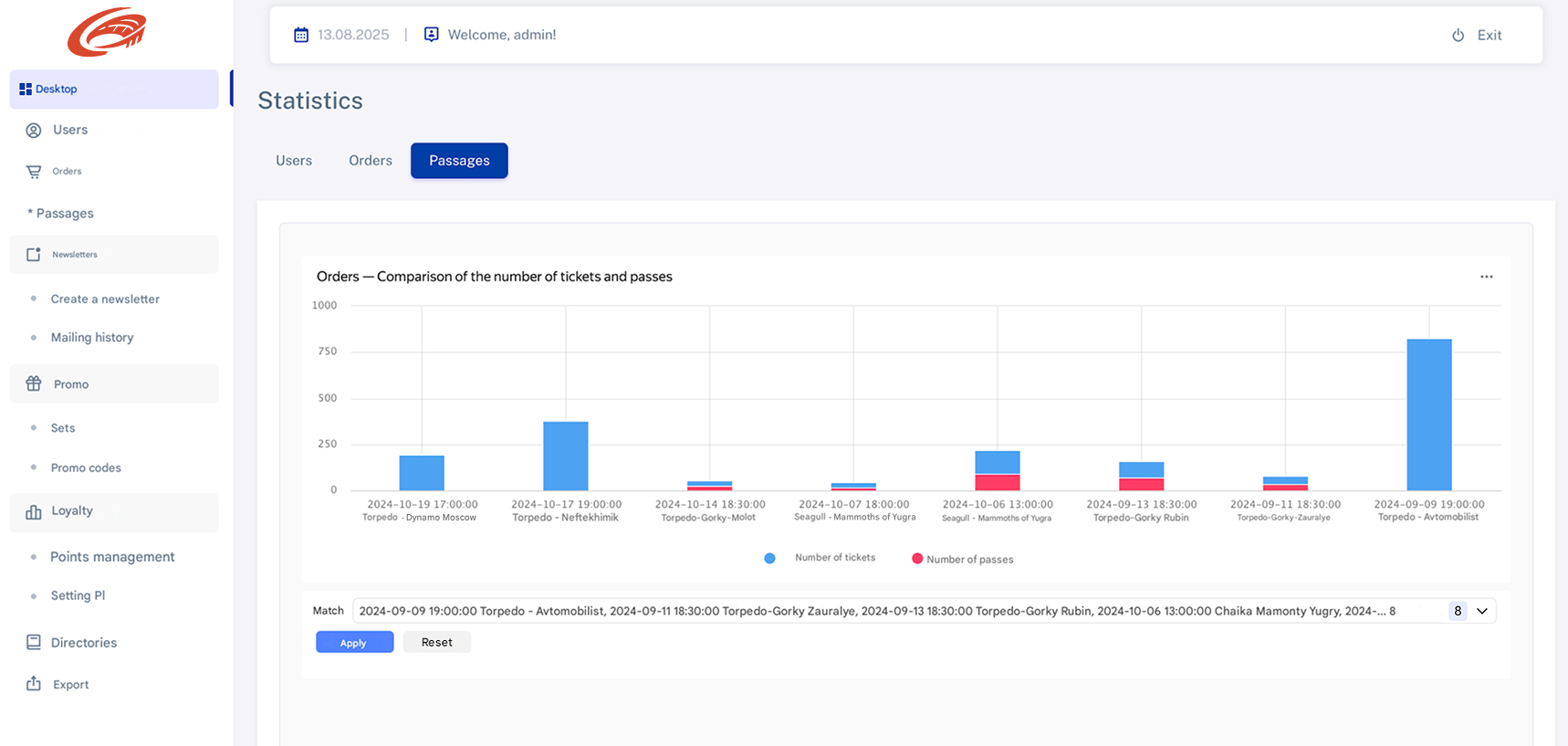
Once you have unified profiles, you need to split them into groups that behave differently. The standard approach is RFM analysis — Recency, Frequency, Monetary value — which scores each fan on when they last purchased, how often they purchase, and how much they spend.
But RFM alone misses the nuance. The most effective sports CRMs layer behavioral and contextual data on top:
Attendance triggers. What makes a casual fan buy a ticket? Some fans respond to opponent quality (they show up for derbies and big-name visitors). Others respond to weather forecasts (sunny weekend = family outing). Tribune tracks these correlations and flags them in the fan profile.
Lifecycle stage. A first-time attendee needs a different experience than a 10-year season ticket holder. The first-timer might need wayfinding help and a welcome offer. The veteran might respond to an exclusive meet-and-greet invitation.
Churn risk. When a season ticket holder attends fewer matches than last year, or a regular buyer goes quiet for 60 days, the CRM flags them for a win-back campaign before they're gone entirely.
Revenue potential. Some fans spend heavily on merchandise but never upgrade their seats. Others buy premium tickets but ignore the club shop. Knowing the difference lets you make the right offer to the right person.
Borussia Dortmund's data team segmented their 80,000+ matchday fans into over 40 micro-segments based on combinations of these factors. They reported a 12% increase in non-ticket matchday revenue in the first season after implementing micro-segmentation, primarily from better-targeted food, beverage, and merchandise offers.
Running Campaigns That Work
Mass promotions — "20% off all merchandise this weekend!" — still generate some revenue, but their margins shrink every year. The clubs getting the best results run targeted scenarios tied to specific triggers.
Trigger-Based Campaigns
Here are the campaign types that consistently deliver results across multiple CRM platforms:
Post-match momentum. After a win, the club sends a merchandise offer featuring the match highlight — a goal scorer's jersey, a commemorative scarf. Tribune automates this within 30 minutes of the final whistle. The window matters: fans are most likely to purchase within 2 hours of a positive result.
Seat companion offers. When a fan buys a single ticket, the system offers the adjacent seat at a small discount. The pitch is simple: "Bring a friend." This works because it lowers the barrier for the fan's companion, who might become a regular attendee. Several clubs report 15-20% take-up rates on companion offers.
Attendance streak rewards. After three consecutive matches, the fan gets an automatic upgrade to a better section for the fourth. This rewards loyalty without requiring the fan to ask. It also fills premium seats that might otherwise sit empty.
Birthday and milestone offers. A family package sent on a fan's birthday, or a special offer on their 50th match attended. These feel personal because they are — the CRM pulls the date and the attendance count from the profile.
Churn prevention. When a previously active fan hasn't purchased in 45 days, they receive a personalized email referencing their last match attended and offering a reason to come back. "We missed you at the derby. Here's priority access to the cup match next month."
Choosing the Right Channel
Not every message should go through the same channel. The cost and urgency differ:
- Push notifications and in-app messages cost almost nothing and work well for time-sensitive information: lineup announcements, gate opening times, flash offers during matches.
- Email suits longer content — post-match recaps, bundle offers, season ticket renewal campaigns. Open rates for sports club emails average 25-35% according to Mailchimp's 2024 benchmarks, well above the 21% cross-industry average.
- SMS and messaging apps carry higher costs but higher urgency. Use them for priority access windows (season ticket early renewal) and last-chance offers. Response rates on SMS can hit 40-50%, but overuse destroys them fast.
The key discipline: control message frequency at the individual level, not the channel level. A fan who received a push notification, an email, and an SMS in the same day about three different offers will feel spammed regardless of how relevant each message was. Tribune, Salesforce, and most modern sports CRMs include frequency capping that limits total touches per fan per time period.
Measuring What Matters
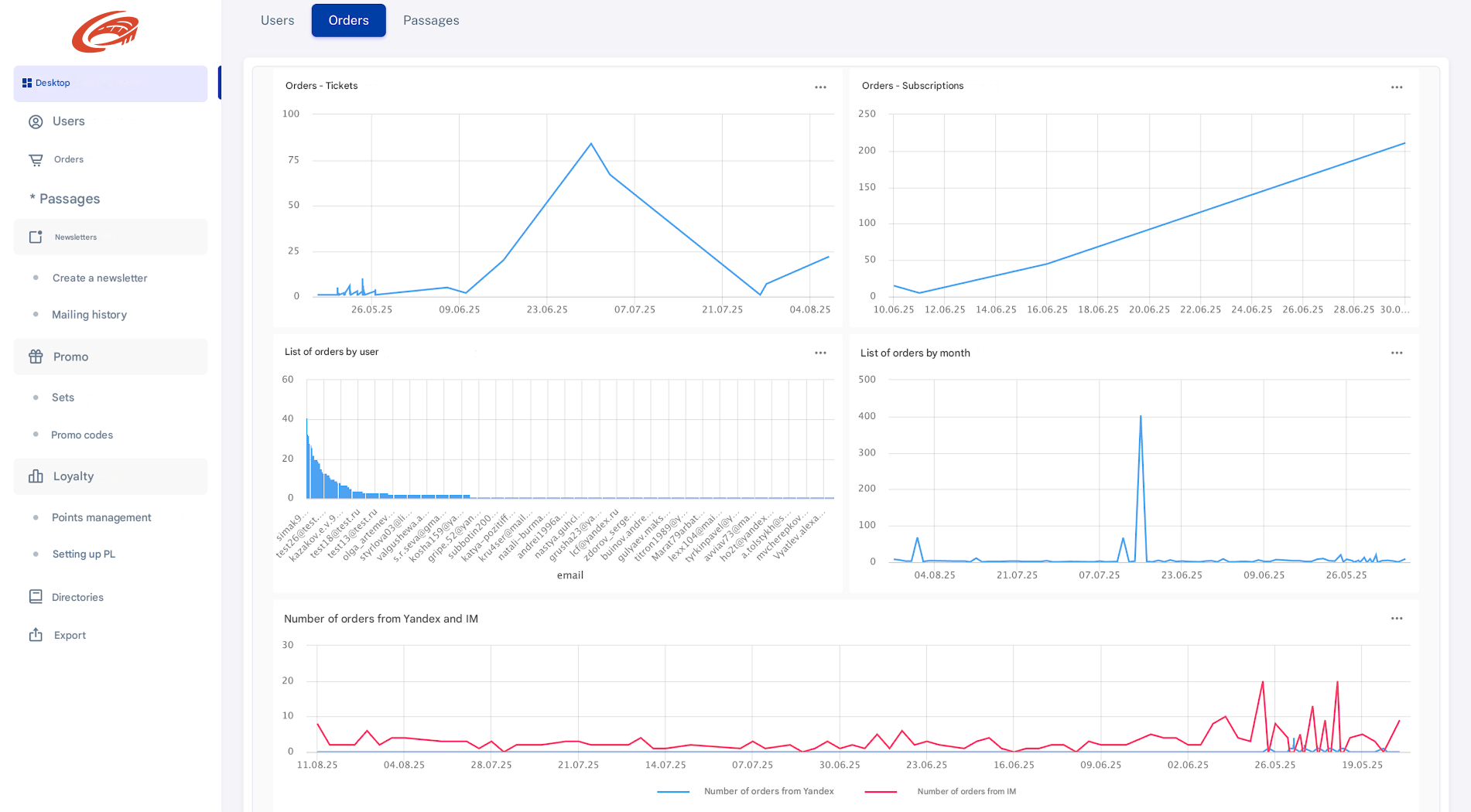
Every campaign needs a control group. This is non-negotiable. Without a holdout group of 10-15% of the target segment who don't receive the campaign, you cannot separate the CRM's impact from organic behavior.
The Metrics That Count
Incremental revenue per fan. Not total revenue — incremental. The difference between what the campaign group spent and what the control group spent. This is the only honest measure of campaign effectiveness.
Repeat purchase rate within 30 days. Did the campaign bring fans back, or did it just pull forward a purchase they would have made anyway? If the 30-day repeat rate doesn't increase, the campaign generated a one-time bump, not a habit.
Average order value by segment. Track this over time to catch "discount addiction" — when fans start waiting for promotions before purchasing. If AOV drops while volume increases, you're training fans to expect discounts.
Channel fatigue indicators. Push notification opt-out rates, email unsubscribe rates, SMS block rates. Rising numbers here mean you're overcommunicating, regardless of what your revenue numbers say.
Season-End Analysis
At the end of each season, the CRM team should run a full audit:
- Segment performance. Which segments grew in value? Which shrank? Did your high-value segments stay stable or did fans churn out?
- Campaign attribution. Which campaigns generated the most incremental revenue? Which had the best ROI (accounting for discounts given)?
- Channel effectiveness. Where did you over-communicate? Where did creative fatigue set in (same message type, declining response rates)?
- Product feedback loop. Were there obstacles to purchase — clunky UX, limited payment options, shipping issues for merchandise? CRM data reveals these friction points through abandoned cart rates and drop-off patterns.
- Database health. What percentage of profiles are complete? How many new golden records were created vs. duplicates merged?
A Practical Example: The Derby Campaign
Here's how a targeted CRM campaign works in practice, drawn from a real scenario run through Tribune.
The segment: fans who attended at least two home matches this season, spend above the median, and have a favorite player listed in their profile. They haven't purchased tickets for the upcoming derby, which is five days away.
The offer: a pair of tickets in their preferred section, bundled with a limited-edition derby scarf at 15% off the combined price.
The delivery: push notification first. For fans who don't open the push within 24 hours, an email with a countdown timer. For fans who open but don't purchase within 48 hours, an SMS with a simplified one-tap purchase link.
The control: 12% holdout — these fans receive no campaign communication.
The results to track: ticket conversion rate (campaign vs. control), scarf attachment rate, total revenue per fan, and — critically — whether these fans attend the match after the derby. The real win isn't selling one ticket. It's turning a two-match-per-season fan into a five-match fan.
Getting Started: The First 30 Days
For clubs implementing or upgrading their CRM, the first month should focus on foundations, not campaigns:
Week 1-2: Data integration. Connect your top five data sources to the CRM. Prioritize ticketing, merchandise, and mobile app — these cover 80% of fan interactions. Set up deduplication rules and run the initial merge. Expect to reduce your contact database by 15-30% as duplicates collapse into golden records.
Week 2-3: Baseline metrics. Build a dashboard tracking 10 core KPIs: active fan count, average revenue per fan, repeat purchase rate, season ticket renewal rate, email engagement rate, app DAU/MAU, merchandise conversion rate, attendance rate vs. capacity, churn rate, and database completeness score. You need these baselines before you can measure improvement.
Week 3-4: First segments and campaigns. Build your initial RFM segments. Launch three simple automated campaigns: a post-match merchandise offer, a birthday greeting with a small gift, and a companion seat offer for single-ticket buyers. Set up 10-15% holdout groups for each.
Week 4: Review. Analyze early results. Adjust targeting, messaging, and channel mix based on what the data shows, not what you assumed would work.
The Bigger Picture
A sports CRM does its job when it stops feeling like marketing and starts feeling like service. When a fan gets a message about tickets in their favorite section for a match they'd want to see, at a price that makes sense, through the channel they prefer — that's not a promotion. That's the club knowing its fans.
The clubs that do this well — and the list grows each year — report higher per-fan revenue, stronger season ticket renewal rates, and better sponsor satisfaction (because they can prove audience engagement with data). The clubs that don't will keep sending mass emails to shrinking open rates, wondering why their commercial revenue flatlines.
The data is already there. The platforms exist. The question is whether your club will use them.