Most clubs still manage fan relationships through spreadsheets, scattered email lists, and disconnected ticketing systems. The result: missed upsell opportunities, generic marketing that fans ignore, and zero visibility into who actually fills the seats.
A sports CRM solves this by connecting ticketing, fan data, marketing, and venue operations in one system. But not every CRM works for clubs. Generic platforms like Salesforce or HubSpot lack ticket connections, stadium maps, and fan lifecycle tools that teams actually need.
We built Revanta, sports club software with a sports CRM for ticketing, season passes and fan loyalty, so we know the space well. I've sat through demos of most of these tools, negotiated pricing with their sales teams, and tested how they handle real match-day scenarios. This guide compares 7 CRM systems that actually work for sports organizations, from purpose-built platforms to adaptable general-purpose tools.
How do the top sports CRMs compare side by side?
| CRM | Best For | Built for Sports | Price Range | Notable Clients |
|---|---|---|---|---|
| Revanta | Professional hockey & football clubs | Yes | Custom pricing | Professional hockey clubs, Serbian SuperLiga and Czech Fortuna Liga football clubs |
| EngageRM | Large franchises & leagues | Yes | Enterprise | LA Lakers, Cleveland Guardians, Collingwood FC |
| Arenametrix | European clubs & cultural venues | Yes | Mid-market | 300+ clients, Stade Français, Swiss & Belgian leagues |
| Sport:80 | National federations & governing bodies | Yes | Custom pricing | Swim England, British Fencing, Archery GB |
| Zoho CRM | Small clubs on a budget | No (adaptable) | Free — $65/user/mo | General-purpose |
| Microsoft Dynamics 365 | Large franchises with Microsoft stack | No (adaptable) | $65 — $162/user/mo | Leicester City FC |
| HubSpot | Marketing-first organizations | No (adaptable) | Free — $1,200/mo | General-purpose |
1. Revanta
Revanta Loyalty is a sports CRM built specifically for professional clubs and arenas. Unlike generic CRMs adapted for sports, Revanta was designed from day one around the realities of running a team: season tickets, match-day operations, fan segmentation, and venue access control.
Used by professional hockey clubs and by football clubs in the Serbian SuperLiga and the Czech Fortuna Liga.

When one professional hockey club moved off their spreadsheet-and-email setup, their marketing team could finally see which fans bought season tickets, which ones came to three games and stopped, and which ones only showed up for derby matches. That visibility changed how they planned promotions — targeted offers to lapsed fans brought back roughly 15% of them the following season. Before Revanta, those fans were invisible. They just stopped showing up and nobody followed up because nobody knew.
That story matters because it shows what a purpose-built CRM actually changes in day-to-day operations. It is not about having fancier software. It is about seeing patterns you were blind to before, and acting on them before the season ends.
Advantages
- Designed for professional sports: Templates for hockey, football, and multi-sport clubs. Stadium maps, season ticket management, and event-based workflows come standard — no configuration needed
- Golden Record: A single fan profile that pulls data from tickets, merchandise, app usage, and venue visits, so your marketing team sees the complete picture instead of fragments scattered across five systems
- AI-powered marketing: Predicts which fans are likely to buy season tickets, recommends promotions based on attendance patterns, and automates RFM segmentation. The model improves over time as it ingests more match-day data
- Free integrations: Connects with major ticketing operators, turnstile systems, payment services, and accounting systems without additional fees
- Mobile-first fan cabinet: Fans get a personal account with calendar, merchandise store, stadium maps, and loyalty rewards — accessible on any device
Limitations
- Rich functionality requires onboarding — teams benefit from having a technical specialist during setup
- No free tier; implementation requires investment
- Focused on hockey and football clubs rather than multi-sport federations
- Our AI-powered segmentation needs at least six months of historical ticket data before it starts producing useful predictions. Fresh clubs that just migrated from spreadsheets should expect a ramp-up period
2. EngageRM
EngageRM is a data-driven CRM built on Microsoft Dynamics 365, specializing in fan engagement for professional teams, leagues, and venues. Backed by $6M in Series A funding from Five V Capital, EngageRM has become the go-to platform for major franchises worldwide.
Clients include the LA Lakers, LA Clippers, Cleveland Guardians, New Orleans Saints, and top Australian clubs including Collingwood and Carlton (AFL). The pricing conversation with EngageRM was... enlightening. This is firmly enterprise territory.
Advantages
- Microsoft partnership: Deep connection with Dynamics 365, Power BI, and Azure gives SOC 2 compliant analytics and security that handles 50,000+ concurrent users on match day
- Proven at scale: Used by NBA, MLB, and NFL franchises with stadiums seating 50,000+
- Sponsorship management: Tools for tracking sponsor deliverables, activation, and ROI — a feature most CRMs for clubs ignore entirely. Credit where it's due: their sponsorship management is the one feature we studied carefully when building Revanta. Tracking sponsor deliverables and activation ROI in the same system as fan data is something most CRMs ignore. We're still working on matching that capability.
- Global presence: Offices in the US and Australia with support for multiple sports codes
Limitations
- Enterprise pricing puts it out of reach for smaller clubs. It's expensive.
- Microsoft Dynamics dependency — if your organization runs on Google Workspace or other stacks, the integration advantage disappears
- Requires 3-6 months of custom development for full deployment
3. Arenametrix
Arenametrix carved out a strong niche in Europe by serving both sports and cultural venues — a combination that makes sense when your stadium also hosts concerts. With €8M in funding and 300+ clients including Stade Français and leagues in Switzerland and Belgium, they have the largest installed base of any CRM designed for sports in Europe. Their deep ticketing analytics are solid, connecting with European ticketing systems for attendance tracking and revenue analysis. The AI/ML features lag behind EngageRM and Revanta, though the gap is narrowing. If your club is based in Western Europe and needs a CRM that handles sporting events and cultural programming, Arenametrix is worth evaluating.
4. Sport:80
Sport:80 serves a different market entirely — national federations and governing bodies, not professional clubs. If you're managing membership databases, coaching certifications, and competition results for a national governing body, it's purpose-built for that. Used by Swim England, British Fencing, Archery GB, and other national governing bodies. But if you're running a commercial team selling tickets and building fan relationships, Sport:80 isn't the right tool. Not every club needs this.
5. Zoho CRM
Zoho CRM is a general-purpose CRM that smaller clubs can adapt for their needs. It lacks purpose-built features for sports but the price is hard to argue with. Zoho is cheap. That matters.
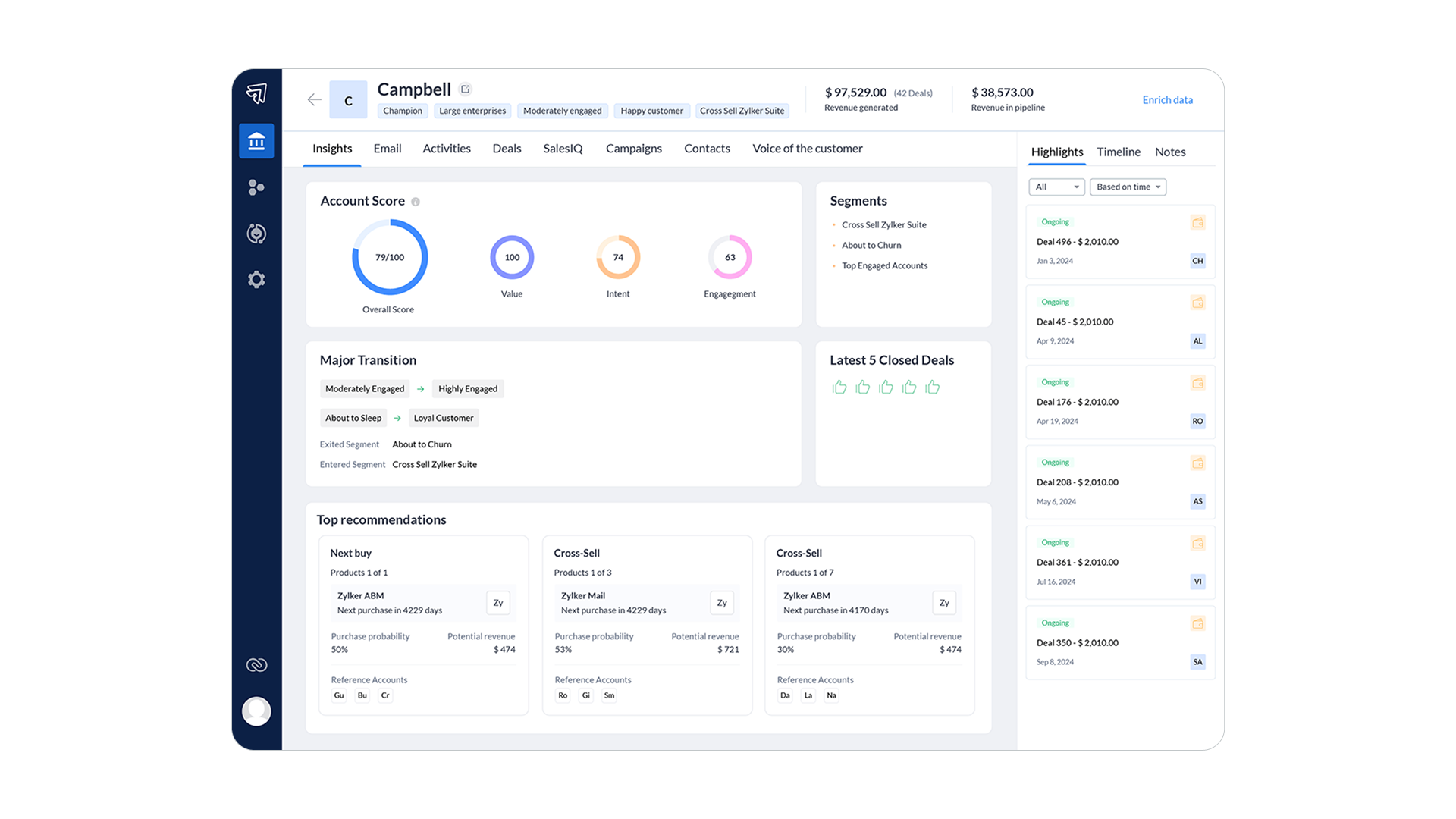
The free tier supports up to 3 users with basic contact management, which makes it the most accessible option for amateur clubs and small organizations just getting started. The automation engine is genuinely impressive for the price — sales funnels, email sequences, and lead scoring all work smoothly for membership drives and sponsorship outreach. Zoho also links to Zoho Mail, Zoho Desk, Zoho Marketing Automation, and 40+ other products in their ecosystem, so you can start with the basic CRM and add modules as your organization grows.
We evaluated Zoho early in our research phase. The automation engine is impressive for the price — sales funnels, email sequences, lead scoring all work smoothly. But the moment we tried to model a season ticket workflow with match-day check-ins, we hit a wall. You can build almost anything in Zoho, but "almost" matters when your operations staff needs things to work on game day.
The real limitation is the gap between what Zoho can do in theory and what it does out of the box for clubs. There are no ticket connections, no stadium maps, no fan lifecycle tools, and no match-day workflows. You are essentially building your own CRM on top of a generic platform, and that requires time and technical skill that most small teams don't have. Support quality also varies depending on your pricing tier, which can be frustrating when something breaks before a big match.
6. Microsoft Dynamics 365
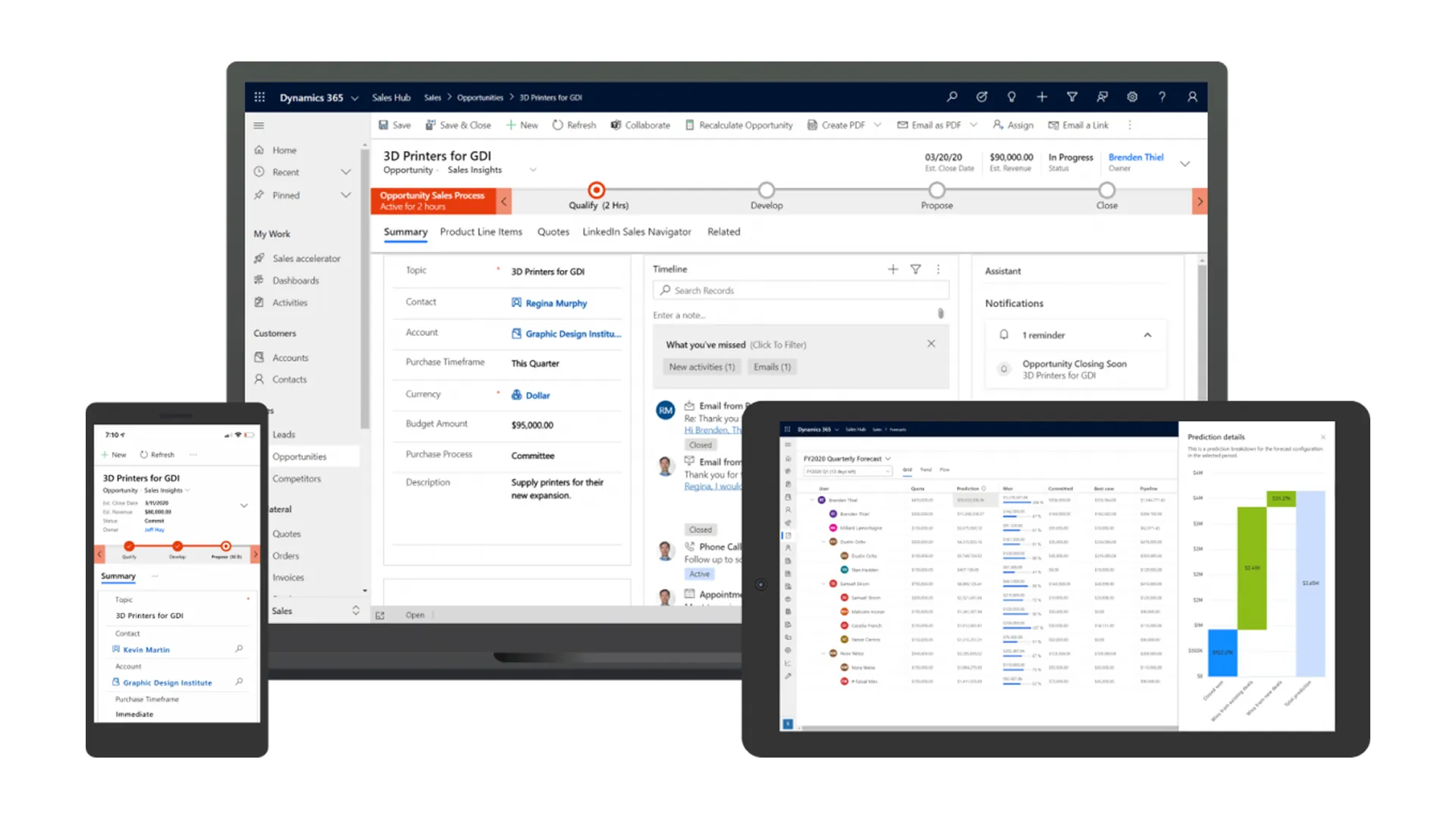
Microsoft Dynamics 365 is an enterprise CRM platform that large franchises customize for fan management and venue operations. Leicester City FC famously uses Dynamics 365 to build supporter profiles based on ticket purchases, retail history, and match attendance.
Advantages
- Predictive analytics through Azure ML: Forecast ticket sales based on historical patterns, analyze fan behavior across touchpoints, and model revenue scenarios. This goes well beyond basic reporting — it's the kind of tooling that pays for itself at scale
- Microsoft ecosystem: Native connection with Outlook, Teams, Excel, and Power BI means your staff works in tools they already know. No retraining required.
- SOC 2, GDPR, and HIPAA-ready security: Critical for organizations handling sensitive fan data, especially clubs operating across multiple jurisdictions
- EngageRM runs on it: If you outgrow a standalone CRM, Dynamics 365 can serve as the foundation for a specialized layer like EngageRM
Limitations
- High licensing and implementation costs — expect $50,000+ for a deployment tailored to your club. Setup takes months.
- Requires specialized consultants for customization, typically 3-6 months of custom development before you see results
- Overkill for clubs with fewer than 10,000 fans in their database, and the per-user pricing between $65 and $162 per month adds up fast across a large operations team
7. HubSpot
HubSpot CRM is a marketing-first platform that teams use for fan communications, email campaigns, and social media management. The free tier is real. And HubSpot's marketing tools are among the strongest in any CRM category.
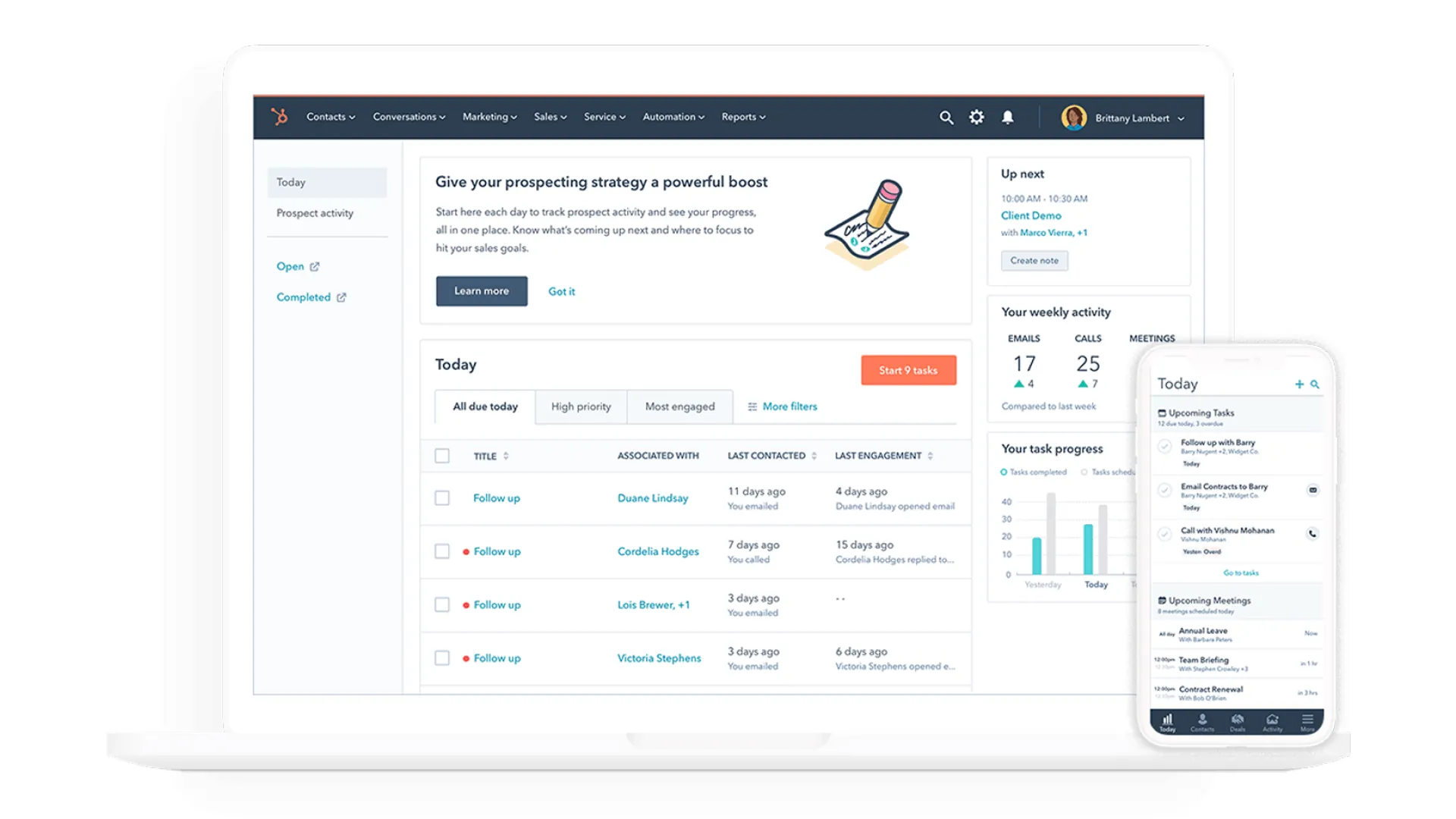
Honestly, if you're a club with fewer than 5,000 fans in a spreadsheet, start with HubSpot's free tier and upgrade when it hurts.
Advantages
- Free tier with contact management, email marketing, and basic reporting — enough for small organizations to get started without spending a dollar
- HubSpot's email builder and A/B testing are better than anything in the sports CRM space. Landing pages, social media scheduling, and email automation are all polished and easy to use
- Easy to learn: Minimal training required. Staff can be productive within days, not weeks.
- 1,000+ integrations in the HubSpot marketplace, covering everything from Slack to Stripe to custom webhooks
Limitations
- No ticketing connections, stadium access control, or fan lifecycle management. You will need to build those workflows yourself or accept the gap.
- Contact limits on free tier — scaling to 10,000+ fans requires paid plans starting at $800/month, which changes the value calculation significantly
- Marketing-focused. Weaker on sales pipeline and operational workflows compared to Dynamics 365 or Zoho.
How do you choose the right CRM for your sports club?
The right CRM depends on your organization type, size, and primary use case:
| If you are... | Consider |
|---|---|
| A professional hockey or football club needing fan management + ticketing | Revanta — purpose-built, sells tickets and season passes natively, other ticketing systems connected per project |
| A major franchise (NBA, NFL, AFL) needing tools that handle 50,000 fans on match day | EngageRM — proven at scale, Microsoft-backed |
| A European club or venue hosting sports + cultural events | Arenametrix — 300+ clients, deep ticketing analytics |
| A national federation managing members and competitions | Sport:80 — built for governing bodies |
| A small club starting from zero with no budget | Zoho CRM (free tier) or HubSpot (free tier) |
| A large franchise already on Microsoft stack | Microsoft Dynamics 365 — or Dynamics + EngageRM layer |
What to look for in any CRM for your club
Before choosing, verify that the system supports your specific needs:
- Ticketing integration — Can it connect to your ticket provider and track purchases per fan?
- Fan profiles — Does it create unified records from multiple touchpoints (tickets, merch, app, social)?
- Segmentation — Can you segment fans by recency, frequency, and monetary value (RFM)?
- Campaign automation — Can you trigger targeted emails based on fan behavior (e.g., attended 3 games but no season ticket)?
- Reporting — Can you measure marketing ROI, not just open rates?
This comparison is maintained by The BrightByte team, creators of Revanta. We update it as the sports CRM landscape evolves. Last updated: September 2026.
Looking for a CRM for your sports club? Get in touch — we can help you evaluate options based on your specific needs.