It is 7:42 PM in Indianapolis. The Pacers are down two with 11 seconds left. Forty-three thousand fans in the arena hold their breath. Three million more watch on screens around the country. Pascal Siakam takes the inbound, drives the lane, draws the foul. He hits both free throws. Pacers win by one.
Inside the next 90 seconds, the team's AI engine sends five million push notifications. None of them are identical. A fan in Brooklyn who follows Siakam gets a 12-second clip of the drive with his name in the caption. A season ticket holder in section 117 gets a discount on a Siakam jersey expiring at midnight. A lapsed fan in Cincinnati who has not opened the app since November gets a re-engagement offer with the same clip and a renewal discount.
The fan in Brooklyn shares the clip to Instagram. The discount in section 117 is redeemed inside 14 minutes. The lapsed fan in Cincinnati reactivates their subscription. None of these decisions was made by a human.
This is not 2030. This is February 2026, and the technology behind it costs less per fan than the energy bill of running the building.
For 20 years, fan engagement in professional sports was a cost center. Teams spent money on email blasts, generic push notifications, and one-size-fits-all marketing because the alternative — personalization per fan — cost more than the revenue any individual fan generated. AI broke that equation. The marginal cost of a personalized message collapsed by two orders of magnitude between 2023 and 2025, and the entire economics of fan engagement flipped from expense to investment.
This article walks through how that happened, which sports organizations cracked it first, and what the operating model looks like 12 to 18 months into the new stack.
Three Economic Shifts That Made This Work
The vendor narrative around "AI fan engagement" goes back to 2018. The substance behind it is much newer. Three specific cost curves had to bend before personalization at scale became commercially honest.
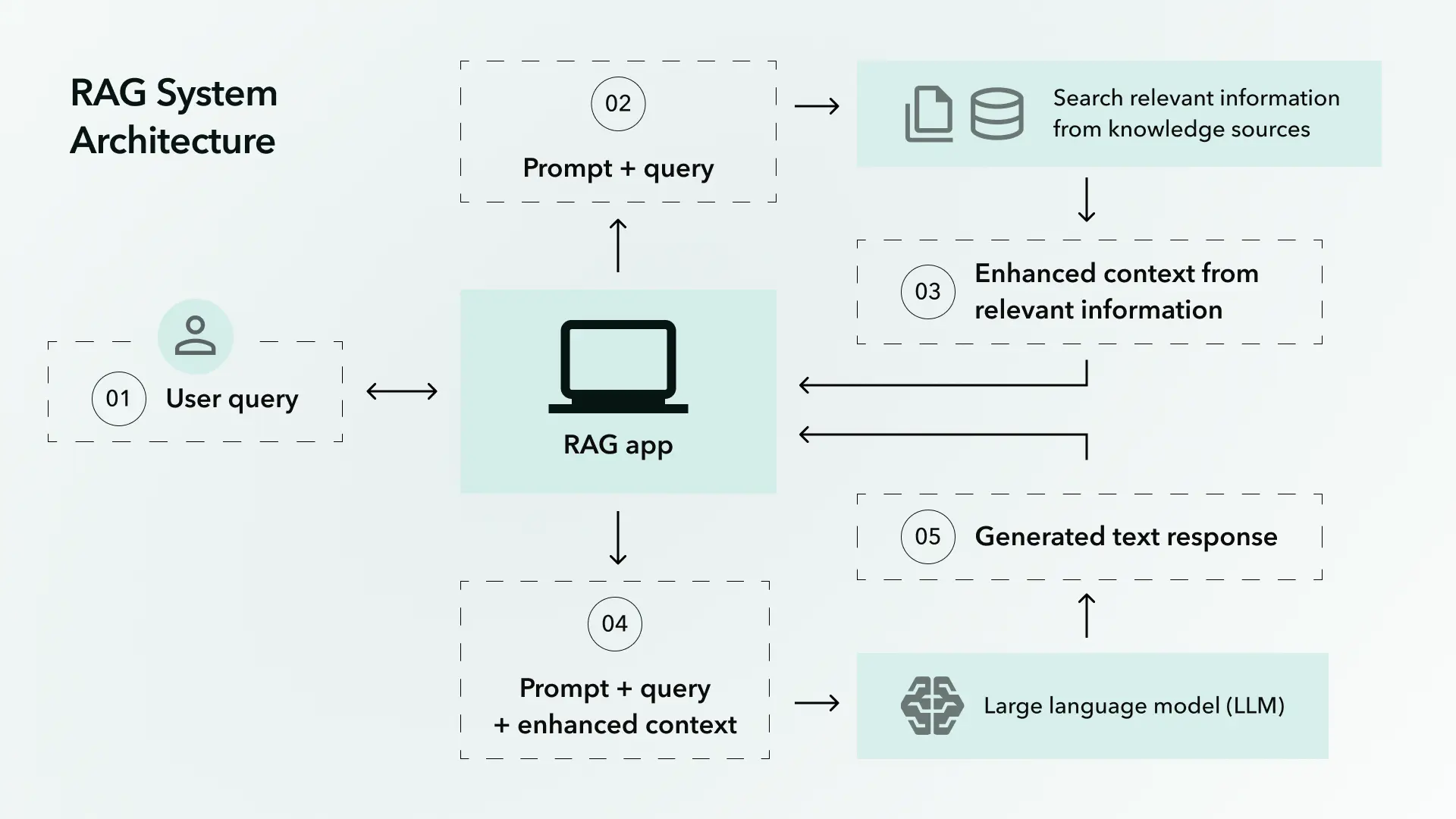
Generation cost fell by 50 to 100 times. A personalized push notification in 2022 required a marketer to write it. Cost: roughly $0.40 in labor for one variant, multiplied across however many segments the team supported. In 2026, a large language model generates the same notification for $0.0003. For an active fan base of 200,000, this means the difference between sending 10 variants and sending 200,000 — the upper bound on personalization stopped being budget and became creative bandwidth.
Compute moved from hours to milliseconds. Real-time decisioning — choosing which message to send to whom in the next 100 milliseconds — used to require expensive coupling of streaming systems and ML models, accessible only to the FAANG companies. The cost of one decision through Cloudflare Workers, AWS Lambda, or Yandex Cloud Functions is now fractions of a cent. Formula 1 sends five million personalized pushes in 90 seconds during a race; the infrastructure cost is a rounding error against the production budget of a single Grand Prix.
Optical and event data became commoditized. Tracking systems like Hawk-Eye, ChyronHego, Genius Sports, and Sportradar feed event-level data with sub-second latency to anyone who pays. A goal triggers a data event; a model fires a notification 200 milliseconds later. Five years ago this required a custom data partnership and a team of engineers. Today it is a SaaS contract with three lines of integration code.
The three curves intersected in 2024. Every fan engagement use case in this article became commercially viable inside the 18 months after that intersection.
Case Study: Wembley Stadium and the Chatbot With 2,335% ROI
The simplest sports AI deployment in 2025 was also one of the most profitable. Wembley Stadium added a conversational chatbot powered by a large language model to its website and matchday digital experience. The bot answers questions about seating, parking, transportation, accessibility, food, and group bookings. It sells tickets inside the conversation: a fan asks for two seats next to each other on Saturday under £100, the bot returns three options and processes payment.
In its first eight months of operation, the bot generated $1.5 million in incremental revenue and posted an ROI of 2,335%. It handled up to 8,000 conversations per day. Cost per conversation: cents.
The interesting part is not the technology. It is the displaced workload. Pre-AI, those 8,000 daily inquiries split three ways. About 60% went to a call center, where each took an average of four minutes at fully loaded cost. About 30% died unanswered after business hours — and most of those were potential ticket buyers who never came back. The remaining 10% bounced through a static FAQ that frustrated more than it solved.
A conversational agent collapses all three into one channel. Daytime call center load drops. Nighttime conversion rises. FAQ frustration disappears. The 2,335% ROI is not magic — it is the dollar value of every dropped after-hours conversation that the bot now catches and converts.
About 60% of NBA franchises and a growing share of European football clubs now run similar chatbots inside their app or website. The MVP build for a mid-sized club runs $50K to $200K and ships in 6 to 10 weeks. Integration with the ticketing system to enable in-conversation purchase adds $100K to $300K.
Case Study: Real Madrid and the 29% Match-Day Revenue Lift
Dynamic pricing is the oldest AI application in sports — Major League Baseball ran a version of it in 2010. What changed in the last three years is granularity and latency. Real Madrid's current system, built in partnership with Adobe and a specialty pricing vendor, runs up to 3,000 price changes per match.
The model reads opponent strength, day of week, weather forecast, days to game, historical conversion at each price point, and secondary market spread. It adjusts seat prices in real time across the bowl. Premium sections get priced up against demand; hard-to-sell upper deck sections get discounts targeted at price-sensitive segments through email and push.
Match-day revenue rose 29% in the first season of deployment. Ancillary merchandise revenue rose 18%, because better-priced tickets meant a fuller stadium, which meant more in-venue spend.
The critical detail most analysts miss: 79% of price changes are downward. Dynamic pricing reads as a tool for squeezing more out of fans; in practice it is a tool for filling empty seats. The Swiss hockey club EV Zug, operating at roughly the scale of a mid-sized European club, lifted ticketing revenue 13.3% across 7,000 optimized seats — and almost all of that came from discounting trouble sections, not raising premium prices.
The infrastructure requirement is real: dynamic pricing needs API access to the ticketing system with write permissions. Clubs running legacy ticketing platforms without modern APIs face an engineering project before they can deploy the model. Implementation runs $80K to $300K and 8 to 12 weeks once the API is available.
Case Study: NBA Franchise and the 700% Video Engagement Lift
WSC Sports built a generative highlights platform that one major NBA franchise deployed across its mobile app in late 2024. The system uses computer vision to identify clip-worthy moments (dunks, blocks, three-pointers, key plays), a language model to write captions in the team's brand voice, and a music engine to score the cuts. Each fan receives a 60-second personalized highlight reel after each game, featuring their declared favorite player and any unexpected standouts.
The numbers from the first season of operation are unusual for any consumer technology rollout: video views rose 700%, total engagement on the app tripled, and 30-day retention lifted 62%. The franchise generated 50,000+ personalized clips per game across its fan base.
LaLiga ran a parallel deployment through WSC Sports across the league. App sessions rose 70%. The league now processes 3.5 million data points per match through optical tracking, all feeding the same personalization engine.
The economics are unforgiving for any team that does not have this. A traditional highlight reel costs $15 to $30 in editor time. Generating 50,000 personalized versions manually is impossible. The AI pipeline does it for under $5 per clip, mostly cloud compute, which makes it a real budget item rather than a fantasy.
The wider point: video used to be a one-to-many medium in sports. Every fan saw the same broadcast clip. AI moved video to one-to-one without changing the production budget. The teams that have personalized highlights running by 2027 will have a fan engagement product the teams without it cannot match.
Case Study: Formula 1 and Five Million Personalized Pushes in 90 Seconds
Formula 1 built the deepest fan personalization stack in global sports across the 2023-2025 cycle. The system unifies 100+ data sources into Salesforce Data Cloud, then runs Marketing Cloud and Agentforce on top. The result: during a race, F1 sends up to 5 million personalized push notifications inside a 90-second window.
Each notification is contextual. A fan in Mexico who follows Sergio Pérez and is playing F1 Fantasy gets a different message than a Lewis Hamilton fan in the UK who has not engaged with the app in three weeks. The message language, tone, and call to action all adjust to the fan profile. The infrastructure that makes this possible is the same Data Cloud architecture serving the customer service agent — when a fan replies to a push and asks a question, the same system answers it without losing context.
Open rates on these notifications run three to four times higher than industry baseline. App session length lifts up to 25% during race weekends. F1 has publicly extended the deployment to cover all major fan touchpoints — service, marketing, sales, fantasy — through 2026 and into 2027.
The takeaway for clubs at smaller scale: the architecture matters more than the absolute volume. A Premier League club sending 200,000 personalized pushes in 90 seconds runs the same operating model as F1 sending five million. The engine is identical. The cost scales sublinearly, which means the per-fan economics actually improve as audience grows.
Case Study: Manchester City × PUMA AI Creator
The most viral sports AI deployment of 2024-2025 had nothing to do with CRM. Manchester City and PUMA launched AI Creator — a tool that lets fans generate their own jersey design through text prompts and buy the result on demand.
The numbers: 54,000 registrations, 180,000 designs generated, 1.7 million votes cast in the community ranking, 30,000 votes in the final round. The campaign earned a Hashtag Sports Award short-list nomination and generated 30 to 50 media placements across global press without paid distribution.
Three things came together. Image generation models (FLUX, Stable Diffusion XL, Midjourney) reached production-grade quality in 2023 and 2024. Print-on-demand infrastructure scaled to handle one-off custom designs at acceptable economics. Mobile-native UX patterns made the generation experience feel like a game rather than a design tool.
For most clubs, the direct revenue from a campaign like this is secondary. The primary asset is acquisition: 54,000 registrations with full demographic and preference data, plus a media moment that puts the brand in front of audiences that would not respond to traditional advertising. The CAC implied by the campaign is a fraction of what equivalent paid social would deliver.
A similar campaign for a mid-sized club runs $200K to $600K all-in, ships in 10 to 16 weeks, and reaches break-even on direct merchandise sales inside the first season if execution is competent.
Case Study: Nashville Predators and AI Sponsorship Lead Generation
The boring corner of fan engagement is corporate sponsorship — and it is also where AI delivers some of the cleanest ROI in sports.
Nashville Predators contracted with a specialty AI vendor (Demand Sports) that mines LinkedIn, news feeds, financial filings, and industry trade press for signals that a company is in the market for sports sponsorship. Signals include: opening a new office in the team's market, hiring a sports marketing executive, launching a local campaign, hitting a revenue threshold in a relevant category. The system produces a ranked list of warm leads with context and a recommended deal size.
The Predators paid a few thousand dollars per month in subscription plus a performance fee. In the 2023/24 season, the system generated $500,000 in closed sponsorship revenue and $750K to $1M in active pipeline. Sportico covered the deployment as a watershed for mid-market franchises.
What changed here is not the data — most of this information was already public. What changed is the cost of synthesis. Large language models read 1,000 LinkedIn updates and 200 news articles in seconds, extract structured signals, and rank prospects. A pre-AI version of this job required an analyst earning $80K per year working full time. A 2026 version costs $30 in API calls per month.
This is also the AI use case that has the cleanest financial ROI in sports because the alternative is unambiguously expensive. A senior sponsorship hire is $150K to $250K annual cost. The AI tool is sub-$50K and produces a ranked pipeline a human researcher cannot match for breadth.
What This All Costs (The Real Numbers)
The published case studies generally come from teams spending low to mid seven figures on fan engagement. That number is a poor benchmark for most organizations because it includes infrastructure those teams had already built for other reasons. The honest cost breakdown for a club starting from a typical 2024 baseline:
Conversational agent (UC-02 baseline). Pilot $50K to $200K, production with ticketing integration $200K to $500K. Ships in 6 to 10 weeks.
Personalized highlights pipeline. $40K to $150K initial build, $5K to $15K monthly cloud compute. Ships in 8 to 12 weeks. Requires broadcast feed access.
Dynamic ticket pricing. $80K to $300K. Ships in 8 to 12 weeks once ticketing API access exists.
Real-time personalized push. $150K to $500K. Ships in 10 to 16 weeks. Requires unified profile foundation.
AI sponsorship lead generation. $50K to $150K annual subscription. Ships in 4 weeks.
Generative campaign tools (per-fan email and content). $80K to $250K. Ships in 6 to 10 weeks.
A serious end-to-end deployment for a mid-sized club lands between $400K and $1.2M in Year 1. Year 2 typically runs 40 to 60% of Year 1 as license costs replace implementation costs. Most of the budget is human time on integration, not the AI models themselves — large language model API spend for a fan base of 500,000 runs $1K to $5K per month, which is not a meaningful line item.
The trap to avoid: vendors will quote $50K for the AI piece without mentioning the $250K of integration work to make it useful. Always price the full deployment, including data pipeline, identity resolution, content workflow, and the operational change management. The AI itself is the cheapest part of the stack.
The Order of Operations
Fan engagement AI projects fail in a predictable pattern: start with the most visible feature (usually personalized push or video highlights), deploy it on top of fragmented data, discover that personalization without a unified profile produces embarrassing results, retreat to generic content. Three teams have written public post-mortems on this exact failure mode in 2025.
The order that works:
First quarter: identity resolution. Stitch profiles across ticketing, app, email, social, and point of sale. Without this, every downstream personalization is operating on partial data and will produce errors that damage trust. This is the same foundation as the CRM stack from the companion article on this site.
Second quarter: lightweight wins. Conversational chatbot, AI-generated social content, send-time optimization. These ship fast, produce visible results, and demonstrate the architecture works.
Third quarter: real-time personalization. Push notifications driven by match events. Personalized highlights. Dynamic email content per fan. This is where the 700% video engagement lifts and the F1-scale push deployments live.
Fourth quarter and beyond: full agent layer. Next-best-action across all channels. Real-time journey optimization. Service, marketing, and sales unified on one decision engine. This is the Pacers and F1 tier.
Most clubs reach productivity in Quarter 2. The compounding starts in Quarter 3. The structural advantage shows up in Quarter 4 and into Year 2.
What Fan Engagement Looks Like at Steady State
The end state of an AI fan engagement deployment is not "better metrics on existing channels." It is a redefinition of what fan engagement means as a category.
Email stops being a campaign and becomes a continuous stream of one-to-one messages, each contextual to the recipient's recent behavior. Push stops being scheduled and becomes event-driven, fired in milliseconds against live match data. Video stops being one-to-many and becomes per-fan. Sponsorship stops being a Rolodex and becomes a daily pipeline. Service stops being a separate department and merges into the same agent layer running marketing.
The economics flip too. Engagement used to be a cost center justified by retention math. In the new model, it is a revenue line: dynamic pricing adds to ticketing revenue, personalized highlights drive app subscription, AI sponsorship leads close incremental deals. The marketing team's P&L looks more like a product team's P&L by Year 2 — generating measurable revenue contribution rather than spending against a budget envelope.
The clubs that move first lock in a structural advantage. A fan who experiences this level of personalization from one team will not accept generic messaging from another. The switching cost in the fan's head — already low in an attention-saturated market — gets driven down further. The clubs that wait will find themselves competing for retention against teams that have already raised the bar on the fan experience.
Conclusion: The Math Just Changed
For two decades, "personalization in sports" was a slide on a vendor deck. The economics did not work; per-fan content cost more than per-fan revenue. AI changed the cost curve by two orders of magnitude across 2023 to 2025, and the entire economic structure of fan engagement flipped underneath while most organizations were still budgeting for the old stack.
The Wembley chatbot at 2,335% ROI is not an outlier. It is what happens when the marginal cost of a high-quality interaction approaches zero. The Real Madrid 29% match-day lift, the NBA 700% video engagement lift, the F1 five-million-push deployment — these are all manifestations of the same underlying shift, applied to different parts of the fan funnel.
The teams that have running deployments today are operating with a 30 to 40% cost advantage on customer operations compared to teams that have not started. By 2028 that advantage compounds into a different operating model — fewer people running larger fan bases at higher engagement.
The decision in front of every sports organization in 2026 is not whether to deploy AI in fan engagement. It is which use case to start with and how fast to compound from there. The cost of waiting is asymmetric: every quarter spent watching the technology mature is a quarter handed to a competitor that already started.
If you are evaluating where AI sits in your fan engagement stack today, we work with sports organizations to audit current capabilities, prioritize the 2 to 3 use cases with the highest near-term ROI, and design the 12 to 18 month sequence to compound from there. Reach out if you want a second opinion on where to begin.
The data layer this depends on is a fan profile with attendance and purchase history. That is what Revanta Loyalty, our sports CRM with ticketing and fan loyalty keeps for a club.